Suspension problems do not always announce themselves with a loud clunk or an obvious failure. Sometimes the first change is more subtle. The vehicle may feel less settled over rough pavement, the steering may feel less precise, or bumps that used to go unnoticed may start making the cabin feel harsher.
Bushings are easy to overlook because they are small compared with shocks, struts, and control arms. Yet they sit at important mounting points throughout the suspension, where they absorb movement and help keep metal components from shifting excessively against one another. As they age, the way the vehicle responds to the road can gradually change.
What Suspension Bushings Actually Do
Suspension bushings are usually made from rubber, synthetic material, or a combination of rubber and metal. They are installed where control arms, sway bars, trailing arms, and other suspension parts connect to the vehicle body or subframe.
Their job is to allow a controlled amount of movement while isolating vibration and noise. The suspension still needs to move as the wheels travel over bumps, but that movement has to remain predictable. A healthy bushing provides flexibility without allowing the attached component to shift farther than intended.
How Worn Bushings Can Change the Ride
As rubber bushings age, they can harden, crack, tear, or separate from their metal sleeves. Once that happens, they may no longer absorb movement the way they did when new.
A hardened bushing can transmit more vibration into the body, while a torn or collapsed bushing can allow excessive suspension movement. Depending on which bushing is worn, the driver may notice more impact harshness, clunking over bumps, extra body movement, or a general sense that the vehicle does not feel as controlled as it once did.
Control Arm Bushings Can Affect More Than Comfort
Control arm bushings help hold the wheels in the correct position as the suspension moves. During acceleration, braking, and cornering, these bushings are subjected to substantial forces.
If they become badly worn, the control arm can shift under load. That movement may make the steering feel less precise and can change wheel alignment while the vehicle is moving. The result can be uneven tire wear, pulling, or a vehicle that feels less stable during braking and lane changes.
Replacing severely worn control arm bushings can restore much of the controlled movement that the suspension was designed to have.
Sway Bar Bushings Can Create Noise and Extra Body Movement
The sway bar helps resist excessive body roll during cornering. Bushings support the bar while still allowing it to twist as the left and right sides of the suspension move.
When those bushings wear, the bar can move more than intended in its mounts. Drivers may hear knocking or squeaking over uneven roads, speed bumps, or driveway entrances. In some cases, the vehicle may also feel slightly less controlled through turns because the sway bar is no longer being held as securely.
Sway bar bushings are usually less expensive and less involved to replace than many control arm bushings, but the effect of worn parts can still be noticeable.
Clunks and Squeaks Can Point Toward Bushing Wear
Worn bushings often create noises when the suspension changes direction. A dull clunk may appear as the vehicle goes over a bump, enters a driveway, or transitions from braking to acceleration.
Squeaking can also develop as rubber dries out or moves against metal surfaces. These sounds are useful clues, but they do not automatically prove a bushing is responsible. Ball joints, sway bar links, strut mounts, shocks, and other suspension parts can produce similar noises, so an inspection is needed before replacement.
Common signs of worn suspension bushings can include:
- Clunking over bumps
- Squeaking from the suspension
- Loose or vague steering
- Uneven tire wear
- Extra movement during braking
- A vehicle that feels less stable through turns
- Visible cracks or torn rubber
Does Every Cracked Bushing Need Replacement?
Not necessarily. Rubber can develop minor surface cracking with age while the bushing still holds the suspension component securely.
Technicians look for deeper tearing, separation from the sleeve, excessive movement, distortion, or evidence that the bushing is no longer controlling the component properly. Condition is more important than appearance alone. Replacing every slightly weathered bushing can add unnecessary cost without producing a meaningful change in the way the vehicle drives.
Why Ride Quality May Improve After Replacement
When a worn bushing is allowing excessive movement, replacing it can make the suspension feel more controlled and predictable. Steering response may feel more direct, clunks may disappear, and the vehicle may track more consistently over uneven pavement.
The improvement depends on which bushings were worn and how severe the wear had become. A single small sway bar bushing may mainly eliminate noise, while badly deteriorated control arm bushings can affect handling, braking stability, alignment, and tire wear in addition to ride feel.
Bushings Are Only One Part of the Suspension
If the vehicle still feels harsh or bouncy after worn bushings are replaced, other suspension components may also need attention. Shocks and struts control spring movement, while springs support vehicle weight. Ball joints, tie rods, wheel bearings, and tires all influence how the vehicle feels on the road.
That is why suspension work is best approached as a complete inspection rather than replacing one type of part based on symptoms alone. A technician can determine whether the concern comes from bushings, dampers, steering components, tire problems, or a combination of several worn parts.
An Alignment May Be Needed After Bushing Replacement
Replacing certain control arm or suspension bushings can change the position of the wheel relative to the vehicle. Even small changes can affect toe, camber, or other alignment angles.
For that reason, a wheel alignment may be recommended after replacing bushings that influence suspension geometry. Correct alignment helps protect the tires and ensures the repair's benefits aren't undermined by wheels that are no longer positioned correctly.
Get Suspension Bushing Service in Tonawanda, NY, With WNY One Stop Automotive
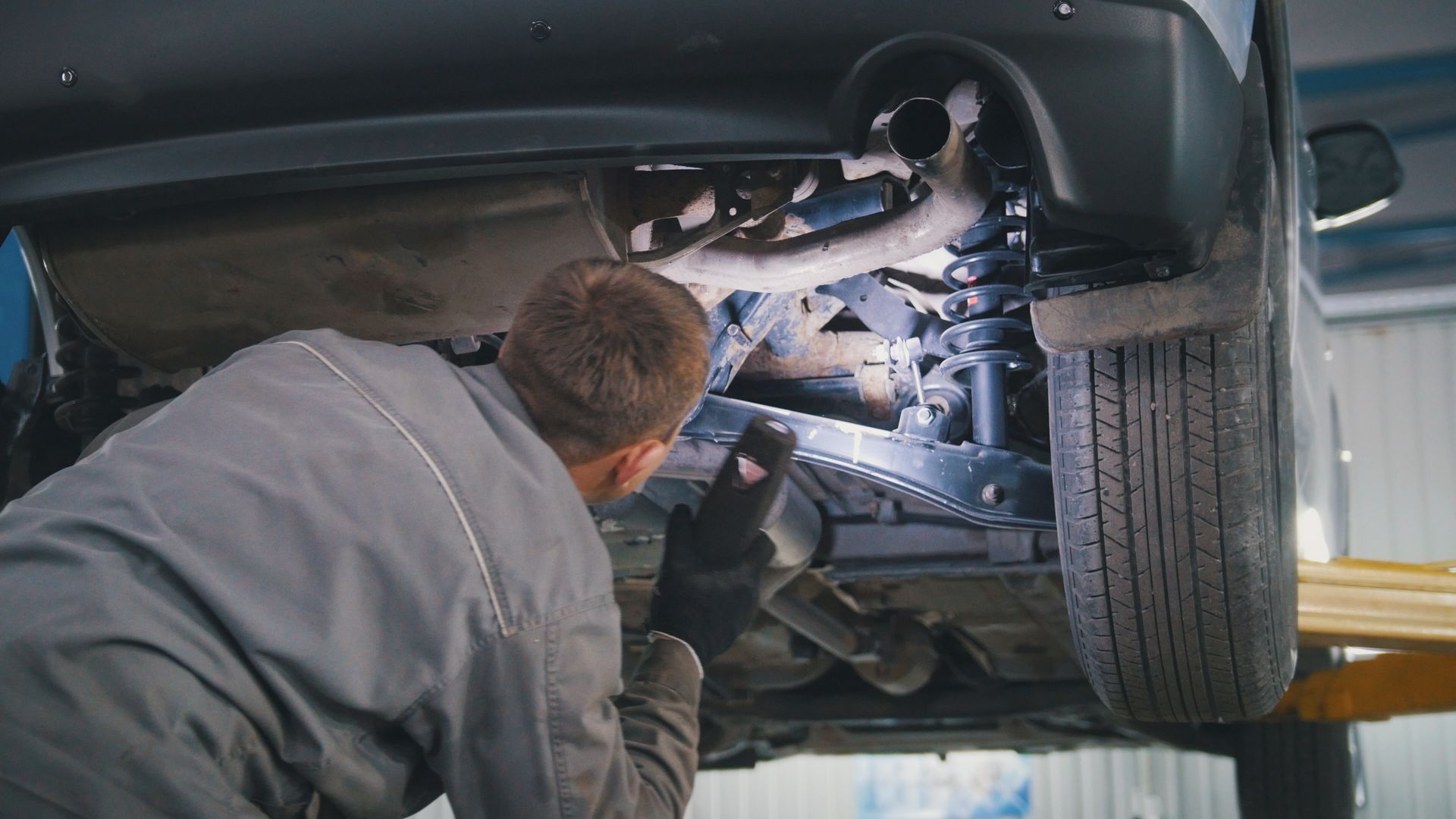
WNY One Stop Automotive in Tonawanda, NY, can inspect control arm bushings, sway bar bushings, suspension links, shocks, struts, and related steering components when your vehicle starts feeling loose, noisy, or less comfortable over the road.
If you have noticed clunks, uneven tire wear, or changes in how the vehicle handles bumps and turns,
contact us to schedule a suspension inspection.