Suspension wear starts with a change in feel. The ride gets rougher, the front end feels looser, or the car starts reacting to bumps in ways it never used to. Most drivers notice that something feels different before they know which part is responsible.
That early change is usually the suspension asking for attention.
How Suspension Wear Starts
Your suspension is responsible for keeping the tires planted, controlling body movement, and helping the vehicle stay stable over rough pavement, during turns, and while braking. When shocks, struts, bushings, ball joints, or links start wearing out, that control starts slipping away. The change is not always loud at first, though it is usually easy to feel once you know what to look for.
A worn suspension does not just affect comfort. It changes how the vehicle responds in everyday driving. A car that used to feel settled starts feeling loose, bouncy, or less predictable, especially on highways, uneven roads, or during quick steering input.
The Ride Stops Feeling Controlled
One of the clearest signs of suspension wear is a ride that no longer feels composed. The vehicle may bounce too long after a dip, hit harder over potholes, or dip forward more than it should during braking. Drivers sometimes describe it as floaty, unsettled, or just old.
That description is usually accurate. Shocks and struts are there to control spring movement, and once they weaken, the body keeps moving after the road disturbance should have ended. Instead of one firm response and recovery, the car starts rising and falling longer than it should. That is a strong sign that the suspension is not controlling motion the way it was designed to.
Steering Changes Usually Show Up Early
Suspension wear changes the steering feel faster than many drivers expect. A vehicle with worn front-end parts may feel slower to respond, less precise in turns, or unstable at highway speed. Instead of holding a line cleanly, it starts needing small corrections that make the drive more tiring.
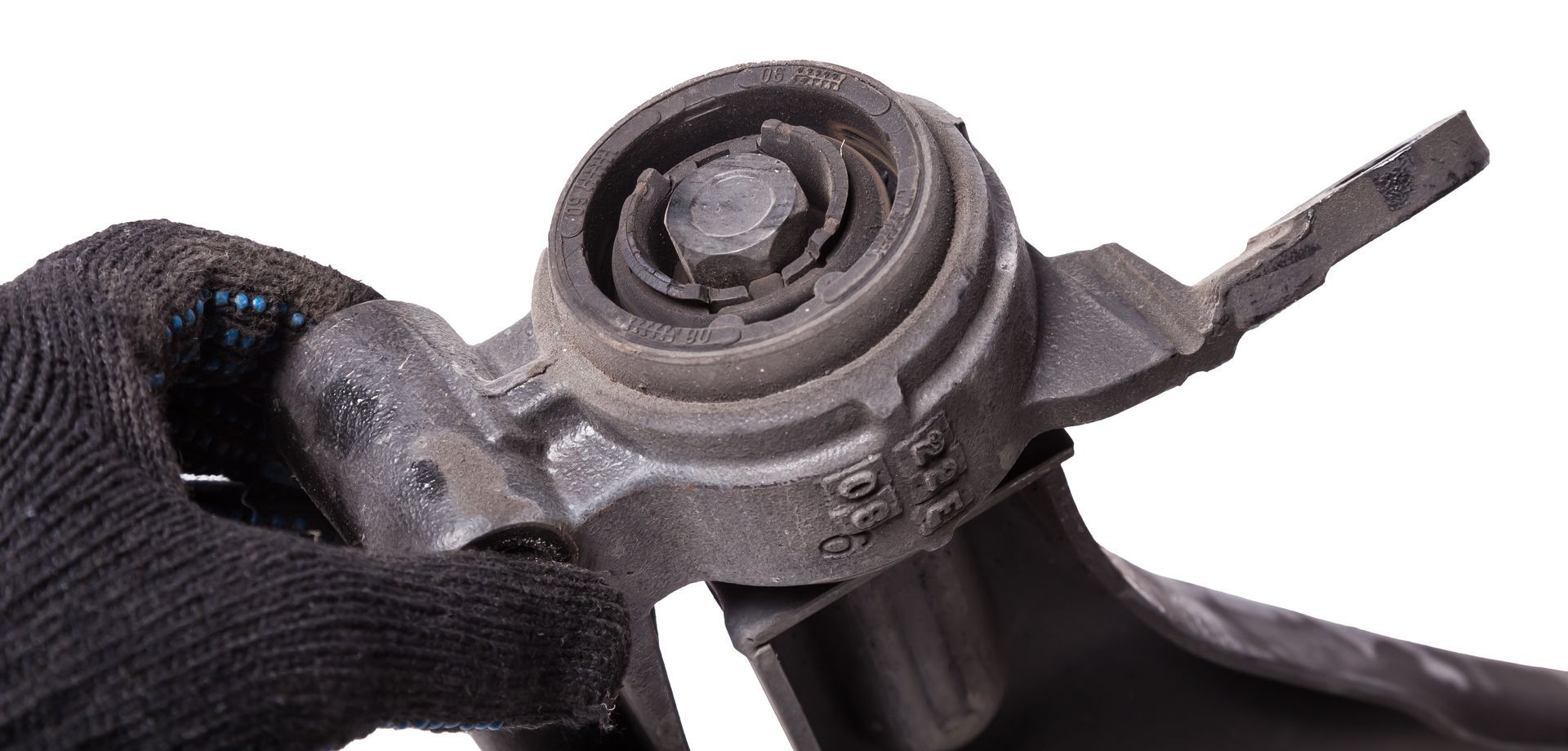
This is especially common when tie rods, control arm bushings, or ball joints have developed play. The steering wheel may still point the tires, though the front end no longer reacts as tightly as it should. During regular maintenance, this kind of looseness is much easier to catch before it turns into heavier tire wear and a much less confident drive.
Tire Wear And Ride Height Tell A Bigger Story
Suspension problems leave visible evidence if you know where to look. Tire wear is one of the biggest clues. Cupping, uneven shoulder wear, or one tire wearing faster than the others usually means the suspension is no longer keeping the tire planted and aligned consistently. The tread ends up telling the same story the driver feels on the road.
Ride height is another clue. If one corner of the vehicle sits lower, or the car seems to lean more than it used to, worn springs or related components could be part of the problem. That is why an inspection should never stop at the obviously worn part. The suspension works as a system, and the rest of the system needs to be checked with it.
Noises Over Bumps Are Not Normal
Suspension wear is not always quiet. Clunks, rattles, knocking sounds, and rubber-on-metal noises over bumps usually point to parts that have loosened up or worn past their normal limits. Sway bar links, strut mounts, bushings, and ball joints are common sources.
A lot of drivers get used to these sounds and assume they come with age. They do not. A healthy suspension stays tight and controlled, even on rough pavement. Once noise starts showing up over speed bumps, driveways, or broken roads, something underneath has usually developed movement where there should be none.
What To Watch For Before It Gets Worse
A few symptoms tend to show up together when a suspension is wearing out:
- The car bounces more than it used to after dips or bumps.
- The front end dives harder during braking.
- The steering feels loose or less steady at highway speed.
- The vehicle leans more in corners.
- You hear clunks or rattles over rough roads.
- The tires are wearing unevenly for no obvious reason.
When two or three of these signs show up at the same time, the problem has usually moved beyond light wear. That is the right point to schedule an inspection before the wear spreads farther into the steering, tires, or alignment.
Why Early Suspension Repairs Save Money
Suspension problems rarely stay isolated. A weak strut leads to extra tire wear. A worn bushing changes alignment angles. A loose joint puts more strain on nearby parts. What starts as one worn component quickly affects the rest of the vehicle’s handling.
That is why it pays to deal with suspension wear early. The car rides better, steers better, and stops beating up the tires. Waiting usually turns a focused repair into a longer list of worn parts, and the car becomes less pleasant to drive with every mile.
Get Suspension Repair In Tonawanda, NY, With WNY One Stop Automotive
If your vehicle feels loose, bouncy, noisy, or less stable than it used to, WNY One Stop Automotive in Tonawanda, NY, can perform a full suspension inspection and pinpoint what is wearing out before it leads to bigger handling and tire problems.
Bring it in while the warning signs are still early and the repair is still straightforward.